The True Cost of Waiting Until Something Goes Wrong
It Usually Starts With Something Easy to Ignore
There is a particular moment that almost every experienced property manager recognises.
The homeowner notices a small damp patch on a ceiling.
Nothing dramatic.
Perhaps just a slight discolouration near an air conditioning vent or a faint watermark in the corner of an upstairs bedroom.
“It's probably nothing,” they think.
Days become weeks. The mark grows a little darker.
Eventually someone investigates, only to discover that a blocked condensate drain has been overflowing slowly for months, allowing moisture to travel unseen through ceilings, insulation and plasterboard.
What began as a routine maintenance issue has quietly evolved into ceiling repairs, repainting, mould remediation and replacement of damaged materials.
Stories like this are remarkably common. Not because homeowners are careless, but because buildings are surprisingly good at hiding problems until they become impossible to ignore.
"The most expensive repair is rarely the original fault. It is everything that happens after it has been left unattended."
The Difference Between Maintenance and Crisis Management
Many people assume maintenance exists to repair things that have already failed.
In reality, the opposite is true.
Professional maintenance exists to reduce the likelihood of failure in the first place. This distinction is fundamental.
Reactive maintenance begins after something breaks. Preventative maintenance begins long before that moment arrives.
The objective is not simply to service equipment, but to identify the earliest signs of deterioration while repairs remain straightforward, affordable and minimally disruptive.
It is a philosophy that has long been adopted across aviation, healthcare, manufacturing and commercial property management. Residential villas are no different.
The systems inside a modern home perform thousands of individual tasks every day. Given enough time, every mechanical and electrical component experiences wear. Preventative maintenance simply accepts this reality and manages it intelligently.
Why Dubai's Climate Accelerates Wear and Tear
Owning property anywhere involves ongoing maintenance. Owning property in Dubai presents a unique set of environmental conditions that require even greater attention.
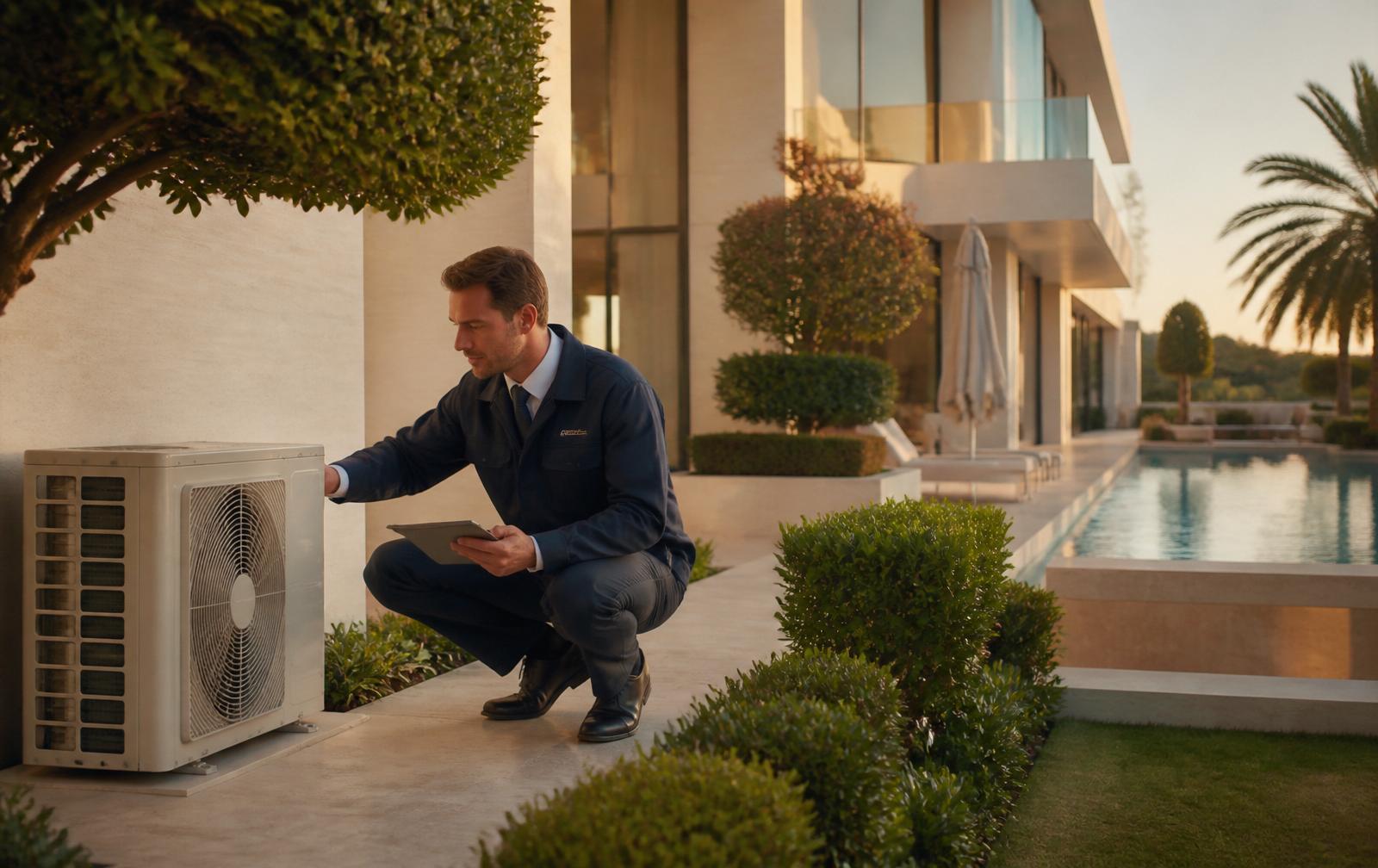
For much of the year, air conditioning systems operate almost continuously, placing significant demands on compressors, motors, fans and drainage systems.
External surfaces endure prolonged exposure to ultraviolet radiation, gradually affecting paints, sealants and protective finishes. Fine desert sand enters outdoor equipment, ventilation systems and drainage channels despite the best efforts to keep it out.
Humidity fluctuates throughout the seasons, placing additional stress on cooling systems and encouraging condensation where ventilation is inadequate.
Even rainfall, although infrequent, presents its own challenges. Because heavy storms occur relatively rarely, waterproofing defects often remain unnoticed until a significant downpour exposes vulnerabilities that may have developed over several years.
None of these conditions indicate poor construction. They simply reflect the environment in which every Dubai property exists. Ignoring them does not prevent deterioration. It merely delays its discovery.
Small Defects Rarely Stay Small
One of the greatest misconceptions in property ownership is that waiting rarely changes the outcome. In practice, waiting often changes everything.
Consider a loose electrical connection inside a distribution board. Initially, it may generate only a small amount of additional heat. Over time, repeated heating and cooling gradually weakens the surrounding components. Eventually, circuits begin tripping unexpectedly. In more serious cases, damaged components require replacement that could have been avoided had the issue been identified during a routine inspection.
The same principle applies throughout an entire property.
- A slightly worn waterproof seal around a shower enclosure becomes hidden water damage behind tiled walls.
- An irrigation leak slowly softens the soil beneath paving until movement begins to appear.
- A neglected swimming pool pump works harder than intended, consuming additional electricity while shortening its own operational life.
Individually, these are relatively modest maintenance issues. Collectively, they represent the majority of expensive repair projects encountered in residential properties.
Emergency Repairs Are Almost Always the Most Expensive Repairs
Emergencies have a habit of arriving at inconvenient moments.
A water heater fails shortly before guests arrive. An air conditioning system stops working during August. A plumbing leak develops while the family is travelling overseas.
In each case, the technical repair may not necessarily be complicated. What increases the cost is urgency.
Emergency call-outs often involve immediate mobilisation, after-hours attendance, temporary solutions, additional trades and secondary repairs resulting from damage that has already occurred.
Preventative maintenance cannot eliminate every unexpected failure. No responsible contractor would suggest otherwise. However, it dramatically reduces the likelihood that minor issues develop into emergencies requiring immediate intervention.
The financial difference over several years can be considerable.
Protecting More Than the Building
When homeowners think about maintenance, they often focus on physical assets. The roof. The plumbing. The air conditioning. The pool.
Yet preventative maintenance protects something less tangible, but equally valuable. Peace of mind.
Many villa owners in Dubai travel frequently for business or spend extended periods abroad. Knowing that a property is being routinely inspected by qualified professionals provides reassurance that cannot easily be measured in financial terms.
Should anything require attention, it is far more likely to be identified during a scheduled visit than discovered unexpectedly upon returning home.
This confidence becomes particularly valuable for investment properties and villas occupied by tenants, where small issues can otherwise remain unnoticed for extended periods.
Preventative Maintenance Also Protects Property Value
Property values are influenced by many factors. Location. Architecture. Community. Market conditions.
However, the physical condition of the property remains one of the few variables entirely within a homeowner's control.
A well-maintained villa presents differently. Mechanical systems operate efficiently. Interior finishes remain in better condition. Exterior spaces continue reflecting the quality expected of premium residential communities.
Should the owner decide to sell, prospective buyers often recognise evidence of careful maintenance long before they review technical inspection reports. Likewise, landlords benefit from reduced void periods and greater tenant satisfaction when maintenance issues are addressed proactively rather than reactively.
Routine care therefore contributes not only to lower repair costs but also to the long-term preservation of the property's market appeal.
The Role of Professional Villa Health Checks
One of the most effective ways to prevent unexpected repairs is through structured property inspections. Often referred to as Villa Health Checks, these assessments provide homeowners with an informed overview of their property's condition.
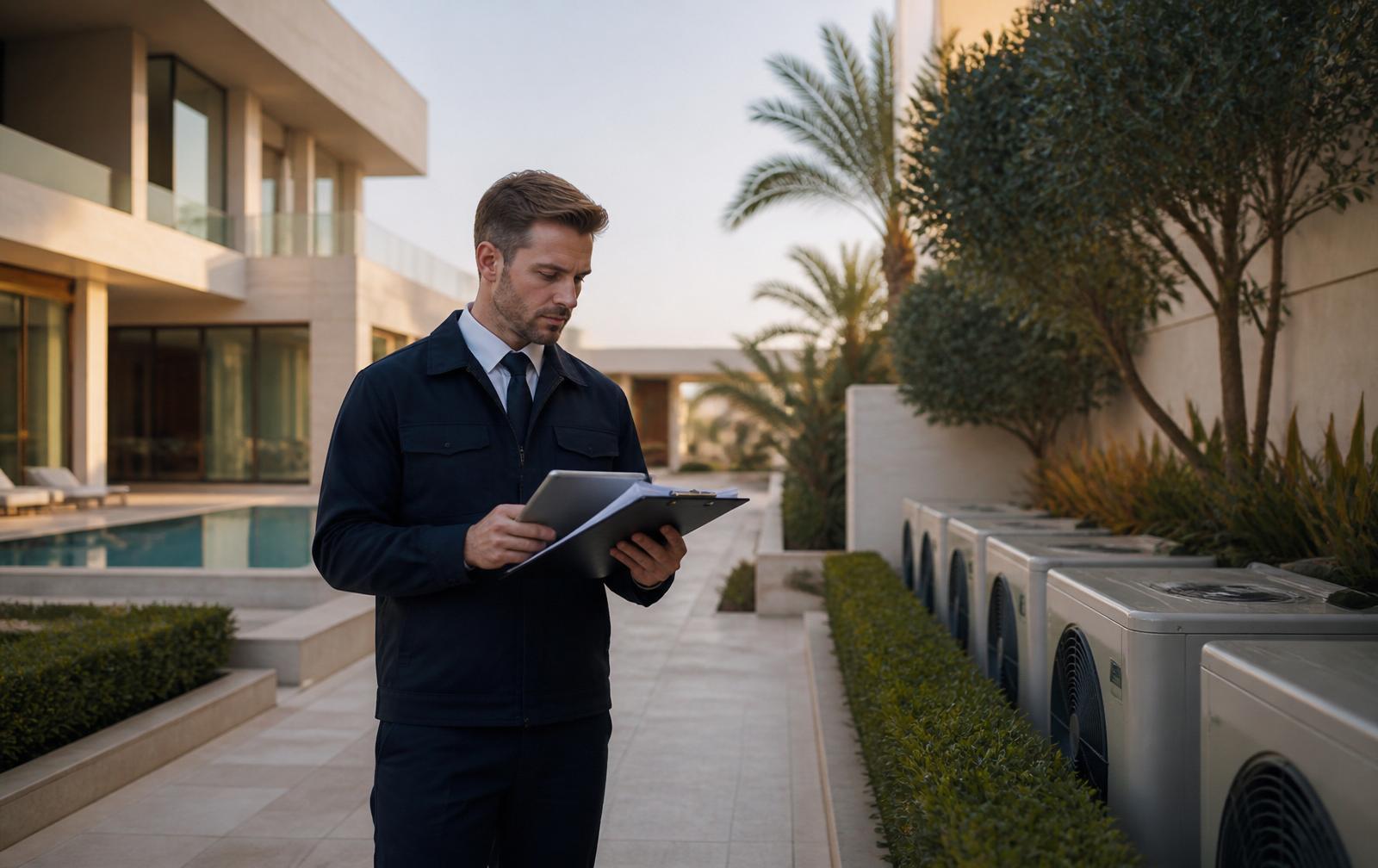
Rather than waiting for faults to become obvious, technicians systematically inspect the home's essential systems, identifying early indicators of wear before they become disruptive.
Electrical installations, plumbing, air conditioning, roofing, waterproofing, pumps, drainage systems and external areas are all reviewed within a structured process. Detailed reports allow homeowners to understand what requires immediate attention, what should be monitored and what remains in excellent condition.
This proactive approach transforms maintenance from reactive decision-making into planned property management.
Choosing a Maintenance Provider Wisely
Annual maintenance programmes vary considerably from one provider to another. Some focus primarily on emergency call-outs. Others place greater emphasis on preventative care, routine servicing and detailed inspections.
When comparing providers, homeowners should consider far more than the annual price. Questions worth asking include:
- Are preventative inspections included?
- Does the contract provide regular Villa Health Checks?
- Are emergency response times clearly defined?
- Will photographic reports be provided?
- Are technicians qualified across multiple disciplines?
- Is communication transparent throughout the year?
The quality of a maintenance programme is often determined not by how quickly problems are repaired, but by how effectively they are prevented.
The Most Affordable Repair Is Often the One That Never Happens
Perhaps the greatest advantage of preventative maintenance is that its successes are rarely visible.
There is no dramatic emergency. No urgent late-night call. No flooded ceiling. No unexpected disruption to family life.
Instead, systems continue operating quietly in the background, exactly as they were designed to do.
In many ways, that is the true purpose of professional maintenance. Not simply fixing what is broken, but ensuring that many problems never have the opportunity to develop at all.
A Final Thought
Owning a villa in Dubai brings with it exceptional opportunities and equally important responsibilities. The city's climate, combined with the complexity of modern residential properties, makes preventative maintenance one of the most sensible long-term investments a homeowner can make.
Whether you choose DHS UAE or another reputable maintenance provider, investing in a structured maintenance programme is ultimately about more than avoiding repair bills. It is about protecting your home, preserving its value, reducing uncertainty and ensuring that one of your most significant investments continues to perform exactly as it should.
Because the best maintenance is rarely the work you notice. It is the work that quietly prevents tomorrow's problems from ever arriving.
About DHS UAE
DHS UAE is a British-managed property solutions company specialising in villa maintenance, residential renovations, fit-out projects and preventative property care across Dubai. By combining British management standards with local expertise, we help homeowners protect, improve and preserve the long-term value of their properties through carefully planned maintenance, transparent communication and exceptional workmanship.